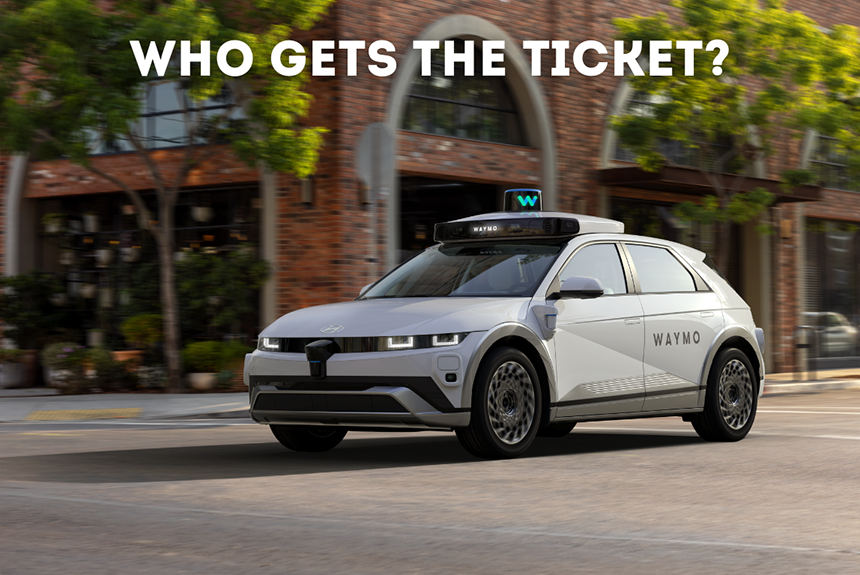
Although autonomous cars on our suburban roads aren’t a huge issue just now, they certainly will be in the not too distance future. With the rise in popularity of robotaxi companies like Waymo in America, the litigious capital of the world, it’s interesting to know how the legal ramification of the autonomous vehicle era will play out.
In a recent lawyersweekly.com.au article Slater and Gordon’s head of work and road claims, Bree Smith, addressed the conundrum of how the law views the situation of someone being hit by a self-driving car when, technically, a human isn’t driving the car.
“As of now, fully autonomous vehicles are not yet legal for public use in Australia, with their operation limited to controlled trial and testing scenarios. However, semi-autonomous features, such as Tesla’s Autopilot, are available and in use in Australia. In traditional vehicle accidents, liability typically rests with the driver who was legally deemed at fault; however, the introduction of autonomous systems complicates this.”
According to Smith, if you are in an incident with a self-driving or semi-autonomous vehicle, the following applies:
- The human driver is typically held responsible, as they are expected to supervise the vehicle operation and intervene if needed.
- If a defect in the vehicle’s automated system contributed to the accident, there may be grounds to pursue a product liability claim against the manufacturer.
“To prove the fault was with the car, would involve demonstrating that the vehicles automated features malfunctioned or failed to perform as intended, leading to the collision. In incidents involving semi-autonomous vehicles, there are many questions regarding whether the human driver or the vehicle’s automated system is responsible. Semi-autonomous vehicles are classified as level 2 automation and require human drivers to remain engaged and ready to take control when necessary” Smith said.
“The most important question will be determining who made the decision that caused the accident, the person or the car”.
As it stands at the moment, there is currently no uniform legislation across Australia specifically addressing accidents involving autonomous vehicles, however the federal government is reportedly developing legislation that will facilitate the safe integration of autonomous vehicles on Australian roads by 2030.
Until then, one can’t help but feel that it’s a legal minefield, but according to Bree Smith – “As autonomous vehicle technology continues to evolve, so too will the legal frameworks governing their use, and it’s something that we all need to be aware of”.
So how is America coping, particularly as there is a real influx of robotaxis that on many occasions have no humans in the car at all.
This motortrend.com article looks at a situation where a Waymo fully autonomous robotaxi broke the law in front of a police officer:
Who Gets a Ticket When a Waymo Does Wrong and Nobody is in the Robotaxi to Cite? – motortrend.com
If you’re really bored and interested, here is the National Transport Commissions current framework regarding autonomous vehicles in Australia,
The regulatory framework for automated vehicle in Australia – February 2022
Image: Waymo